Sharing tools with you!
Understanding the Autonomic Nervous System: Pathways to Stress and Calm
Have you ever wondered why some stressful experiences seem to linger in your body, affecting your thoughts, emotions, and even physical well-being? Our autonomic nervous system (ANS) plays a crucial role in how we respond to stress and relaxation. The key is understanding how our body communicates with our brain—not just the other way around.
In this blog, I’ll share insights from neuroscience, personal experience, and my mBraining Master Coach Certification that have transformed how I view stress, emotions, and well-being.
The Science Behind the Autonomic Nervous System
The ANS has two primary branches:
1️⃣ The Sympathetic Nervous System (SNS): The Stress Response
- Often called “fight or flight,” this system prepares the body to respond to danger or stress.
- 80% of communication in this system travels from the brain to the body—meaning our thoughts can trigger physical stress responses.
2️⃣ The Parasympathetic Nervous System (PNS): The Calming Response
- Known as “rest and digest,” this system promotes relaxation and recovery.
- 80% of communication in this system travels from the body to the brain—meaning calming the body first leads to a calmer mind.
🔹 Key takeaway: We’ve been taught to “think our way” through stress, but the math says otherwise—we only have a 20% chance of success using thoughts alone. Instead, we need to calm the body first to calm the mind.
📖 Reference: NCBI – The Autonomic Nervous System
My Experience: Releasing Trapped Energy
Like most kids, I had my fair share of traumatic experiences that left trapped energy in my system. As I deepened my knowledge through my mBraining Master Coach Certification, I learned that this trapped energy can be released by tuning into our internal senses (interoception) and fully feeling the emotion rather than suppressing it.
One of the most profound realizations was that emotions are energy in motion (e-motion)—and if we don’t release them, they stay stuck. By engaging in embodied practices (which I’ll share below), we can shake out stored energy and allow our nervous system to reset.
🔹 Important Note: This work is best done with a trained practitioner, as emotional release can be deep and powerful.
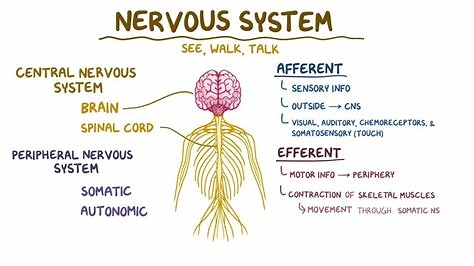
📖 Reference: ScienceBeta – Afferent vs. Efferent Neurons
Practical Techniques to Regulate Your Nervous System
1️⃣ Grounding & Breathwork
- Barefoot on grass: Reconnect with the earth to discharge excess energy and activate the parasympathetic system.
- Balanced Breathing (5-5 method): Breathe in for 5 seconds, breathe out for 5 seconds—this equalizes the sympathetic and parasympathetic systems.
2️⃣ Movement & Shaking
- Stress energy builds up in our system. Shaking out excess tension allows your body to reset and prevents emotional stagnation.
3️⃣ Changing Your Emotional State with Embodied Cognition
- Before an important event, rather than getting overwhelmed by nerves, smile! This signals to your body that the situation is exciting rather than stressful.
- Reframe nervous energy: Instead of resisting it, let it flow through you. Move, breathe, and shake it out so you can step into your unique energy and shine.
Why This Matters
Most of us in Western society have been conditioned to dominate life through our head brains. We’ve been taught to “think positive,” “be logical,” or “analyze” our stress away. But neuroscience shows that our body plays the leading role in how we experience and regulate emotions.
When we learn to work with our body’s signals rather than against them, we unlock a powerful new way of being—one that fosters calm, clarity, and resilience.
Recommended Reading (Amazon Australia)
📚 “The Body Keeps the Score” – Bessel van der Kolk (Link)
📚 “Breath: The New Science of a Lost Art” – James Nestor (Link)
Final Thoughts & Disclaimer
This information has the power to change your life for the better—but it is not a substitute for professional support. If you are working through deep-seated trauma or stress, I strongly recommend seeking guidance from a trained medical practitioner who specializes in nervous system regulation. Remember Coaching is not therapy or counselling it is instead outcome focussed action. Your choices and responsibility is always your own!
✨ Your body holds wisdom. Learn to listen, and you will thrive. ✨